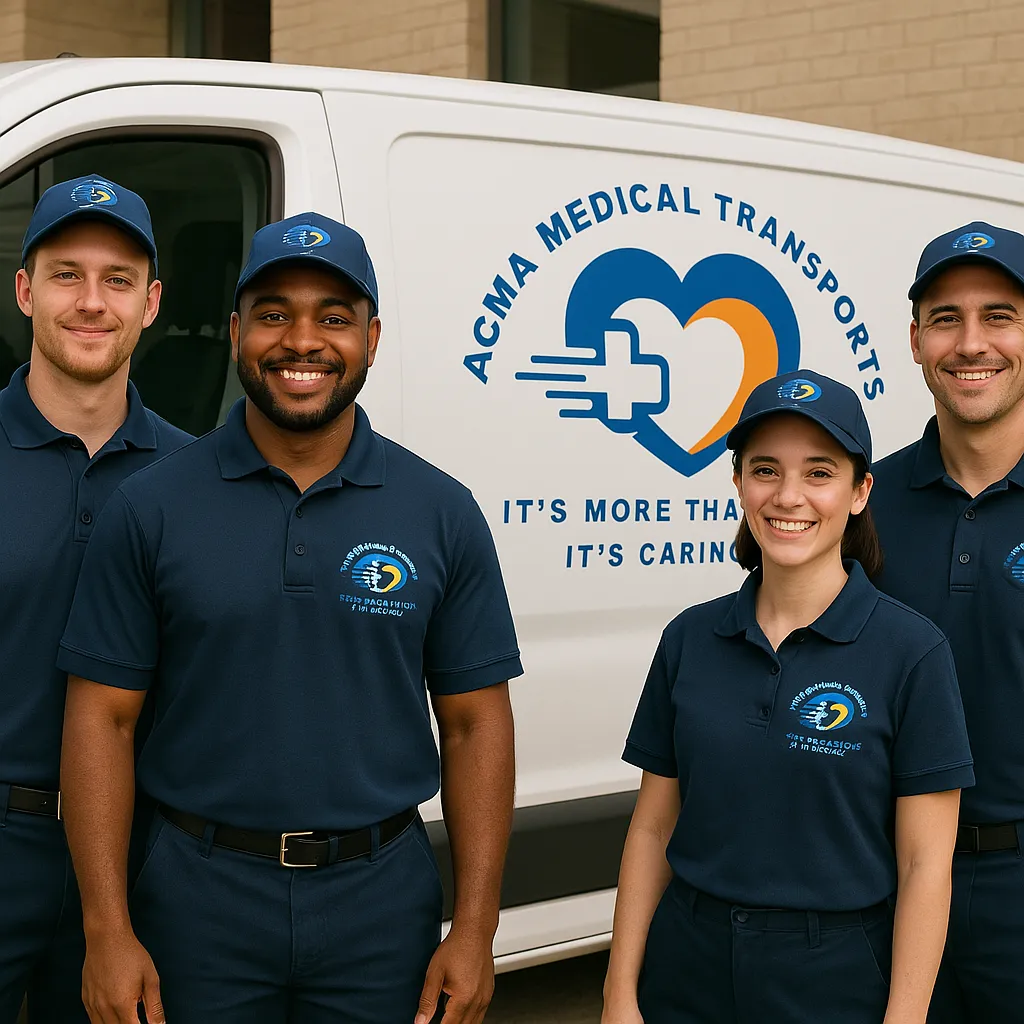
Non-Emergency Medical Transportation for Hospital
The Quiet Crisis Nobody Talks About: How Seniors Lose Access to Healthcare One Missed Ride at a Time
There's a moment that happens in almost every family at some point.
Dad hands over his car keys. Mom admits she hasn't been to the doctor in eight months because "it's just too complicated to get there." A grandparent starts declining appointments they used to keep faithfully not because they don't care about their health, but because getting there has quietly become an impossible problem.
Nobody makes a big announcement about it. It just starts happening, and then one day you realize how many appointments have been missed, how many prescriptions haven't been refilled, how much the health situation has quietly drifted.
Transportation is one of the most underestimated health issues affecting older Americans today. And medical transportation services for seniors are one of the most practical, most impactful solutions available yet many families don't know they exist, or don't realize how accessible they actually are.
Why Getting to the Doctor Gets So Hard
Driving is freedom, and most adults don't give up that freedom willingly. By the time a senior stops driving, something significant has usually happened: vision has deteriorated past a safe threshold, reflexes have slowed, a doctor has recommended they stop, or a frightening near-miss made the decision unavoidable.
After that, the math gets hard fast.
Public transit works well in some cities and is completely impractical in others and even where it exists, navigating buses and schedules is a real challenge for someone with mobility limitations or cognitive changes. Rideshare apps assume you have a smartphone, know how to use it, and can get yourself in and out of a vehicle without assistance. Relying on adult children works until it doesn't until they have work conflicts, live across town, or are managing their own families and can't add another standing commitment to the week.
The result? People start missing appointments. First one, then two, then it becomes the pattern.
What Happens When Seniors Miss Medical Appointments
The consequences aren't abstract. They're measurable and they're serious.
A senior with hypertension who misses regular monitoring appointments is a senior whose blood pressure goes unchecked and who ends up in the emergency room after a preventable crisis. A patient with diabetes who can't get to their endocrinologist consistently is a patient whose condition drifts out of control in ways that show up as amputations and kidney failure down the road.
The healthcare system has a name for this: avoidable utilization. Preventable ER visits and hospitalizations that happen because people couldn't access routine care. It costs the system billions of dollars. More importantly, it costs patients in suffering that didn't have to happen.
Medical transportation for seniors doesn't just solve a logistical inconvenience. It keeps people out of the emergency room. It keeps chronic conditions managed. It keeps older adults in their own homes, living their own lives, longer.
What Good Senior Medical Transport Actually Looks Like
There's a wide range in quality among transportation providers, and it matters more with older passengers than with almost anyone else.
Good senior medical transport is door-to-door in the truest sense. That means the driver doesn't wait at the curb they come to the front door, help the passenger to the vehicle, drive to the destination, and assist them inside. When the appointment is over, they're there to bring them home the same way. For a senior living alone, that end-to-end assistance isn't a luxury. It's what makes the whole thing possible.
Good senior transport is also matched to the passenger's actual mobility level. At ACMA Medical Transport, we offer three services tailored to every need:
Ambulatory Transport
For seniors who walk independently or with minimal assistance a cane, a slow pace, someone to steady them going up a step. Our drivers are trained to assist with patience and without rushing.
Wheelchair Transport
For seniors who use a manual or power chair. Our vehicles have proper lifts and securement systems. Our drivers know how to operate them safely and how to keep every wheelchair passenger stable and comfortable throughout the trip.
Stretcher Transport
For seniors who need to lie flat during transit after a procedure, during a transfer to or from a skilled nursing facility, or due to a condition that makes sitting upright painful or unsafe.
Knowing which service a parent or loved one needs is the first step. If you're not sure, our team will help you figure it out.
The Appointments NEMT Covers for Seniors
People often assume medical transportation is only for serious, high-stakes appointments. It's much broader than that and that breadth is exactly what makes it valuable:
•Routine medical care primary care visits, annual physicals, specialist follow-ups
•Specialist visits cardiology, oncology, neurology, orthopedics, rheumatology
•Physical therapy and rehabilitation often multiple times per week
•Dialysis a reliable NEMT provider becomes one of the most important fixtures in a dialysis patient's week
•Outpatient surgery and procedures seniors almost always need transport home post-procedure
•Dental and vision appointments often deprioritized but genuinely important for quality of life
•Pharmacy runs picking up prescriptions when you can't drive
Hospital discharge ACMA coordinates directly with facilities to make discharge transport seamless. See everything we cover on our services page.
The Independence Factor
Here's something that doesn't get said often enough: senior medical transportation isn't just about the appointment. It's about dignity.
When an older adult has to ask a family member to rearrange their workday every time a medical need comes up, there's a subtle but real erosion of independence that comes with it. It breeds guilt. It creates reluctance to ask for help even when it's genuinely needed. Over time, some seniors start declining necessary care rather than feeling like a burden.
NEMT changes that dynamic entirely. A senior who can book their own ride or whose family can arrange it easily, without dropping everything is a senior who feels in control of their own healthcare. That psychological dimension is real, and it matters for mental health and for engagement in care.
Our drivers at ACMA Medical Transport are trained to reinforce that dignity at every step. They're not doing seniors a favor they're providing a professional service that every passenger deserves.
What Families Should Ask When Choosing a Senior NEMT Provider
If you're arranging transportation for an elderly parent or relative, the provider you choose makes a real difference. Here's what to ask:
•Are drivers background-checked and trained specifically for medical transport?
•Do they offer true door-to-door service not just curb-to-curb?
•Can they accommodate wheelchairs and mobility aids?
•How do they handle scheduling for recurring appointments like dialysis or PT?
•What is their communication like when delays happen?
ACMA Medical Transport checks every one of these boxes. We'd welcome the chance to tell you more.
Getting Started Is Simpler Than You Think
Many families put off setting up NEMT because they assume it'll be complicated, expensive, or hard to figure out. It's usually none of those things. Here's how it works with ACMA:
•Tell us what you need who's traveling, where they're going, their mobility situation
•We confirm the details vehicle type, pickup time, any special requirements
•Your driver arrives at the door on time, trained, and ready to help
•We bring them home same level of care on the return trip
For recurring needs, we can set up a standing schedule. Request a ride here or call us to talk through the situation first.
Frequently Asked Questions
What types of medical transportation are available for seniors?
Seniors can access ambulatory transport (for those who walk independently), wheelchair transport (for those using manual or power wheelchairs), and stretcher transport (for those who must remain lying down). ACMA Medical Transport offers all three.
Does Medicare cover medical transportation for seniors?
Standard Medicare does not cover routine NEMT. Medicare Advantage plans may include transportation benefits. Medicaid covers NEMT for eligible beneficiaries in most states.
How do I arrange medical transportation for an elderly parent?
Contact a licensed NEMT provider like ACMA Medical Transport, share pickup and destination details along with any mobility needs, and schedule 24–48 hours in advance. Recurring appointments can often be set up on a standing schedule.
Is NEMT available for non-medical trips like pharmacy runs?
Yes. ACMA Medical Transport provides transport for pharmacy pickups, essential errands, and other personal needs in addition to strictly medical appointments.
