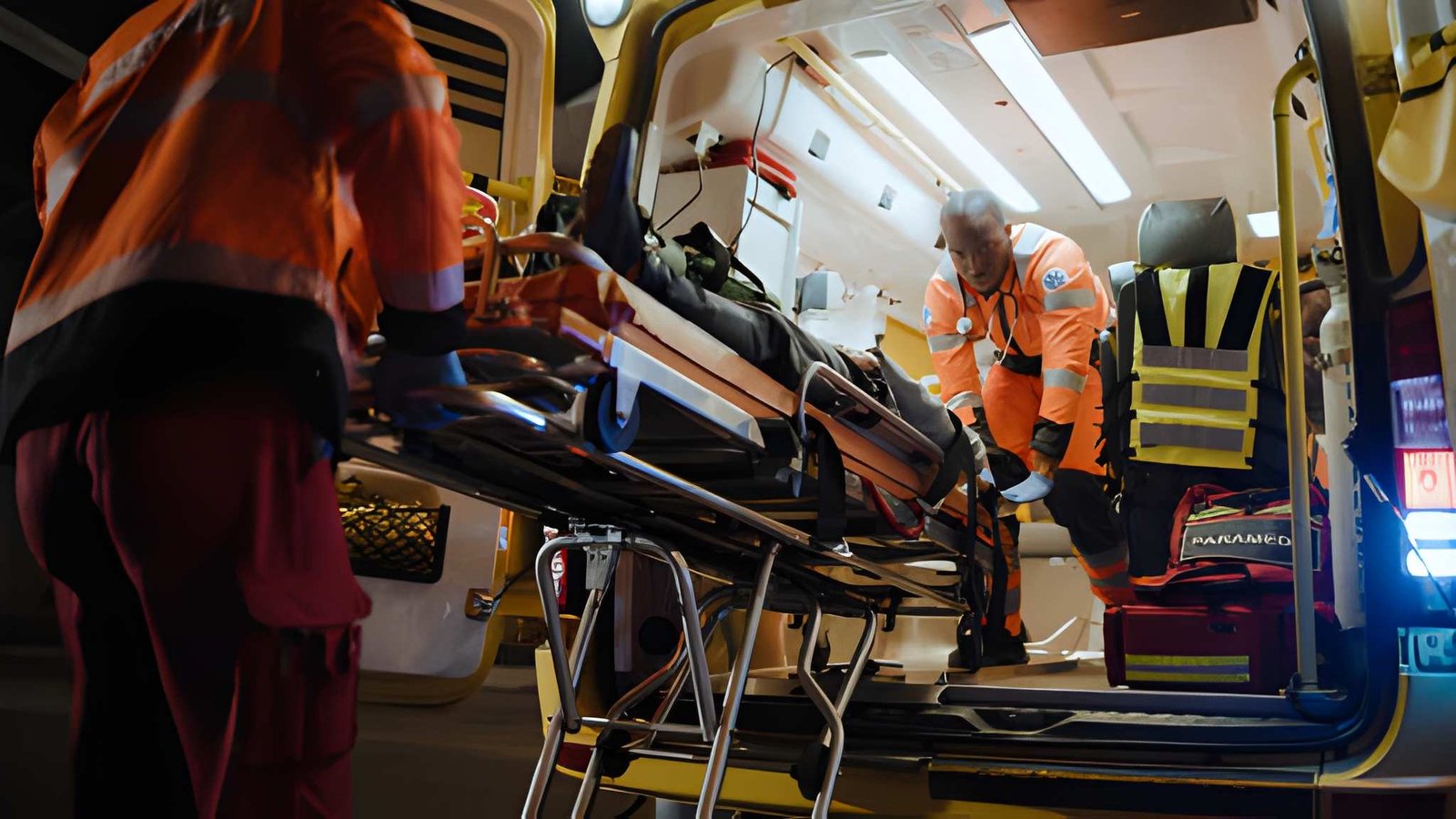
Non-Emergency Medical Transportation: Stretcher Transport Services
Most people are familiar with ambulatory medical transport — a trained driver, an accessible vehicle, a patient who can walk to the car with some assistance. Many are also familiar with wheelchair transport. But there is a third category of non-emergency medical transportation that is less discussed and critically important: stretcher transport.
For patients who cannot sit upright safely for any length of time, stretcher transport is not a luxury or an upgrade. It is the only medically appropriate way to get them where they need to go. This guide explains who needs it, how it works, and what to look for in a provider.
What Is Stretcher Transport?
Stretcher transport — sometimes called gurney transport or recumbent transport — is a category of non-emergency medical transportation in which the patient travels lying flat on a stretcher for the entire journey. The vehicle is a specially configured van or small transport vehicle equipped with a mounted stretcher, safety restraints, and sufficient space for at least one attendant.
Unlike ambulatory or wheelchair transport, the patient in stretcher transport is fully reclined and does not need to sit upright at any point — not during loading, not during the ride, and not during unloading at the destination.
Who Needs Stretcher Transport?
Patients who require stretcher transport typically fall into one or more of these categories:
•Post-surgical patients whose procedure involved the abdomen, spine, or lower limbs and who cannot safely flex at the hip or sit upright during recovery
•Patients with severe orthopedic injuries or conditions — fractures, spinal instability, or joint replacements where weight-bearing and positioning restrictions apply
•Patients with neurological conditions such as ALS, advanced multiple sclerosis, or severe stroke deficits that prevent safe seated positioning
•Patients with severe pressure ulcers (bedsores) where sitting would cause pain or worsen the wound
•Individuals being transferred between healthcare facilities — from a hospital to a skilled nursing facility, or between rehabilitation centers — who are not yet stable enough to sit
•Patients with certain cardiac or respiratory conditions where positioning is medically restricted
•Patients on continuous wound VAC therapy, IV infusion, or other active treatment during transport
How Stretcher Transport Differs from Ambulance Transport
This is one of the most important distinctions in all of medical transportation. Many patients and families assume that if a patient needs to travel lying down, they need an ambulance. That is not true — and the cost difference is enormous.
An ambulance is dispatched for patients who need active medical intervention during transport — paramedic-level care, IV medications, cardiac monitoring, airway management. A stretcher transport vehicle is for patients who are medically stable but simply cannot sit upright. They do not need a paramedic. They need a safe, professional vehicle and a trained driver and attendant.
Using an ambulance for a non-emergency stretcher transport situation is not only unnecessarily expensive — ambulance rides can cost $1,500–$3,000 or more — it also diverts emergency resources from patients who genuinely need them. Stretcher NEMT is the appropriate, cost-effective solution for stable patients who must travel lying down.
What a Stretcher Transport Vehicle Includes
A properly equipped stretcher transport vehicle includes:
•A mounted, adjustable stretcher rated for the patient's weight
•Certified restraint systems to secure the stretcher during transit
•Sufficient interior space for the patient plus at least one attendant
•Climate control to maintain patient comfort during transport
•Equipment mounts for IV poles, wound VAC devices, drainage bags, or other medical devices the patient may require
•A hydraulic or ramp-assisted loading system that allows safe stretcher loading without requiring the patient to transfer
The Role of the Attendant in Stretcher Transport
Stretcher transport typically involves both a driver and at least one attendant. The attendant's role is to monitor the patient throughout the journey, assist with positioning if needed, manage any medical equipment traveling with the patient, and be the first point of contact if the patient's condition changes during transport.
At ACMA Medical Transport, our stretcher transport staff are trained in passenger care, basic first aid, and emergency protocols. While they are not paramedics, they are prepared to respond appropriately to changes in patient condition and to contact emergency services if needed.
How to Book Stretcher Transport
When booking stretcher transport, provide the following information:
1.The patient's full name and date of birth
2.Pickup address and destination address
3.The reason stretcher transport is needed — post-surgery, positioning restriction, facility transfer, etc.
4.The patient's approximate weight (for stretcher and vehicle capacity confirmation)
5.Any medical equipment that will travel with the patient — IV lines, wound VAC, oxygen, drainage bags
6.Whether the patient requires door-to-door assistance at both ends of the trip
7.Insurance or Medicaid information if the ride is covered
Contact ACMA Medical Transport at acmamedicaltransport.com/contact-us or request a ride online to arrange stretcher transport.
Does Medicaid Cover Stretcher Transport?
In most states, yes. Medicaid covers non-emergency stretcher transport for eligible members when the stretcher is medically necessary — meaning the patient's condition genuinely requires lying flat for the journey. Most Medicaid programs require documentation or a physician order confirming the medical necessity of stretcher transport rather than the less expensive ambulatory or wheelchair options.
If you are booking stretcher transport for a Medicaid member, ask your provider whether they need a physician order or written documentation of the positioning requirement before the trip can be authorized.
Stretcher Transport for Facility Transfers
One of the most common uses of stretcher transport is inter-facility transfer — moving a patient from one care setting to another. Common scenarios include:
•Hospital to skilled nursing facility (SNF) upon discharge when the patient is not yet stable enough to sit
•Skilled nursing facility to hospital for a diagnostic procedure or specialist visit
•Rehabilitation center to home when the patient is discharged but has positioning restrictions
•Hospital to long-term acute care (LTAC) facility
ACMA Medical Transport coordinates closely with hospital discharge planners, nursing facility staff, and social workers for facility transfers. Contact our team to discuss your specific transfer needs.
Frequently Asked Questions
Q: Who needs stretcher transport instead of ambulatory or wheelchair NEMT?
A: Patients who cannot safely sit upright for any duration — due to post-surgical restrictions, orthopedic injuries, neurological conditions, severe pressure ulcers, or certain cardiac or respiratory conditions — need stretcher transport.
Q: Is stretcher transport the same as an ambulance?
A: No. An ambulance provides active paramedic-level medical care during transport. Stretcher NEMT is for stable patients who simply need to travel lying flat. Stretcher NEMT is significantly less expensive and appropriate when no active medical intervention is needed during the trip.
Q: Does Medicaid cover non-emergency stretcher transport?
A: Yes, in most states, when stretcher transport is medically necessary. A physician order or documentation of the positioning requirement is often required. Contact your Medicaid plan to confirm coverage and requirements.
Q: Can medical equipment travel with a stretcher transport patient?
A: Yes. ACMA Medical Transport accommodates IV lines, wound VAC devices, portable oxygen, drainage bags, and other equipment. Provide a full equipment list when booking so the right vehicle and staff are assigned.
Q: How far in advance should I book stretcher transport?
A: At least 24–48 hours in advance for standard bookings. For Medicaid-covered stretcher transport, additional lead time may be needed for prior authorization. Contact ACMA Medical Transport as early as possible.
Contact ACMA Medical Transport
It's More than a Ride — It's Caring.
Address:10175 Fortune Parkway, Unit 1103, Jacksonville, FL 32256
Phone:(904) 834-8164
Email:[email protected]
Website:acmamedicaltransport.com
Hours:Monday – Sunday, Always Open (24/7)
Request a Ride:acmamedicaltransport.com/request-a-ride
