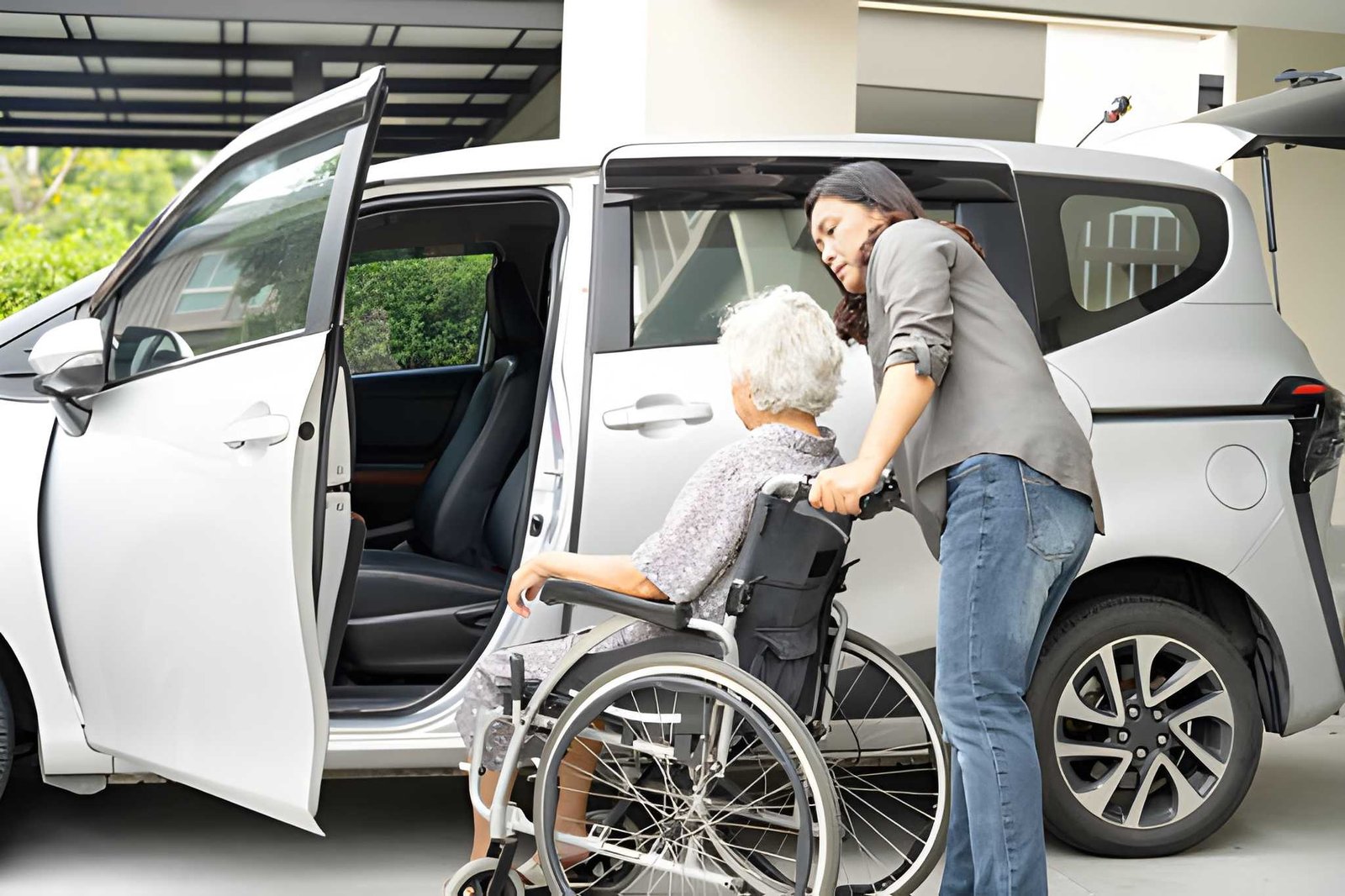
Wheelchair Transportation Services: What Patients and Families Need to Know Before They Book
Wheelchair Transportation Services: What Patients and Families Need to Know Before They Book
When a family member starts using a wheelchair whether it's temporary after surgery or permanent due to a long-term condition one of the first practical questions that comes up is transportation. How do we get them to appointments? What vehicles can actually accommodate a wheelchair safely? And what happens if we book with a company that isn't properly equipped?
These are exactly the right questions to be asking. Wheelchair transportation looks simple from the outside, but getting it right safely, consistently, and with genuine care for the passenger requires more than just a ramp on a van.
This guide covers everything families need to understand about wheelchair transport services before they book: what good service looks like, what to watch out for, and why the right provider makes a measurable difference in a patient's health and quality of life.
What Is Wheelchair Transportation?
Wheelchair transportation is a category of non-emergency medical transport (NEMT) specifically designed for individuals who use manual or powered wheelchairs and cannot transfer into a standard vehicle seat for their journey.
Unlike ambulatory transport where a patient can walk to and from a vehicle with light assistance wheelchair transport requires specialized equipment: vehicles with hydraulic lifts or fold-out ramps, four-point wheelchair securement systems to keep the chair stable during transit, and drivers trained to operate all of it safely while also assisting the passenger throughout the trip.
It's a distinct service category, and not every transportation provider offers it. Before booking any NEMT service for a wheelchair user, it's worth confirming exactly what equipment and training the provider has.
Who Uses Wheelchair Transport Services?
The range of patients who rely on wheelchair transport is broader than most people expect:
•Seniors who have become wheelchair-dependent due to fall injuries, hip or knee replacements, stroke, Parkinson's disease, or general mobility decline
•Individuals with spinal cord injuries or paralysis who use wheelchairs permanently
•Patients recovering from lower-limb surgery who are temporarily non-ambulatory
•People with multiple sclerosis, cerebral palsy, muscular dystrophy, or other conditions affecting mobility
•Dialysis patients and cancer patients whose treatment side effects periodically limit their ability to walk
•Patients being transferred between care facilities who require wheelchair transport between locations
The one thing all of these patients have in common: they deserve transportation that treats them with the same professionalism and dignity as any other medical service not as an afterthought.
What Does Safe Wheelchair Transport Actually Require?
This is where the real differences between providers show up. Here's what genuinely safe wheelchair transportation requires:
Properly Equipped Vehicles
The vehicle itself needs to be purpose-built or professionally modified for wheelchair transport not just a van with a removable ramp thrown in the back. Key features include:
•Hydraulic lift or fold-out ramp rated for the appropriate weight capacity
•Sufficient interior height for the passenger to remain in their wheelchair without hunching
•Four anchor points on the floor to secure the wheelchair frame not just the wheels
•Occupant restraint system seat belt or harness designed for wheelchair users
•Tie-down straps rated for the weight of both chair and occupant
A vehicle that passes a visual inspection isn't necessarily safe. The securement system matters enormously, and it needs to be operated correctly every single time.
Trained, Experienced Drivers
Driver training is where many cut-rate providers fall short. Properly trained wheelchair transport drivers know:
•How to operate lifts and ramps without putting the passenger at risk during boarding and alighting
•How to apply four-point securement correctly for different wheelchair models
•How to assist with transfers when a passenger needs to move from their wheelchair to a different seat
•How to drive smoothly and anticipate stops to minimize jostling for someone in a wheelchair
•How to respond calmly if a passenger becomes uncomfortable or unwell during the trip
At ACMA Medical Transport, our drivers go through specialized training in all of these areas. We don't put someone behind the wheel of a wheelchair-accessible vehicle until they've demonstrated they can operate it safely and treat passengers with the care this work demands.
Door-to-Door Assistance
Door-to-door isn't just a phrase it describes a specific level of service that wheelchair users genuinely need. It means the driver comes to the front door of the passenger's home, assists with boarding, secures the wheelchair properly, drives to the destination, assists with alighting, and helps the passenger inside the building not just to the entrance.
On the return trip, the same care applies: the driver meets the passenger at the building exit, assists them back to the vehicle, and escorts them safely inside their home when they arrive. For a wheelchair user who lives alone, this isn't optional it's what makes the whole thing possible.
Power Wheelchair vs. Manual Wheelchair: Does It Matter for Transport?
Yes and it's worth discussing with your provider when you book.
Power wheelchairs are typically heavier than manual chairs, which affects lift weight capacity requirements. They also have more complex frames that may require different securement points. Some power chairs have non-standard footrest configurations or electronics that need to be considered during transit.
Manual wheelchairs are generally easier to secure and lighter to handle, but some folding chairs have frames that aren't well-suited to certain securement systems.
When you contact ACMA Medical Transport to book, let us know the make and model of the wheelchair if you have it, or at minimum whether it's a power or manual chair. This helps us confirm the right vehicle and driver for your specific situation.
What to Expect on Your First Wheelchair Transport Ride
If you or a family member is using wheelchair transportation for the first time, here's a realistic picture of how it goes with a professional provider:
•Your driver arrives at the scheduled time and comes to the front door of the home
•They introduce themselves, confirm the destination, and assist the passenger to the vehicle
•The lift or ramp is lowered, the passenger is guided onto it, and it's raised smoothly into the vehicle
•The driver secures the wheelchair at all four anchor points and attaches the occupant restraint
•You're driven to the destination with care smooth acceleration, gentle stops
•At the destination, the process reverses: lift down, securement released, ramp clear, passenger assisted to the building entrance and inside
It should feel professional, unhurried, and respectful. If it doesn't if the driver seems uncertain about the equipment, rushes through securement, or treats the passenger as an inconvenience that's a provider worth replacing.
How to Choose a Wheelchair Transport Provider
Not all providers who advertise wheelchair transport are equally equipped to deliver it. Here are the questions worth asking before you book:
•Are your vehicles equipped with four-point securement systems?
•What weight capacity do your lifts support?
•Are your drivers specifically trained in wheelchair securement and passenger assistance?
•Do you offer true door-to-door service, including assistance inside buildings?
•Can you accommodate both power and manual wheelchairs?
•Are you licensed and insured for medical transport in this state?
At ACMA Medical Transport, we answer yes to all of these. We're happy to walk through our equipment and training in detail contact us anytime.
Wheelchair Transport for Recurring Medical Appointments
Many wheelchair users need transport not once but regularly dialysis three times a week, physical therapy twice a week, weekly oncology, monthly specialist visits. Managing each trip as a one-off booking is exhausting and leaves too much room for things to fall through.
ACMA Medical Transport sets up standing schedules for recurring appointments. Book once, and your rides are automatically confirmed for each session. It's one of the most practical things we offer families managing complex care situations. Learn more on our services page or request a ride to get started.
Frequently Asked Questions
What is wheelchair transportation service?
Wheelchair transportation is a type of non-emergency medical transport (NEMT) for individuals who use manual or power wheelchairs. It uses specially equipped vehicles with lifts or ramps, four-point securement systems, and trained drivers to transport wheelchair users safely to medical appointments and other destinations.
What is four-point wheelchair securement?
Four-point securement uses four tie-down straps anchored to the vehicle floor to stabilize the wheelchair frame during transit, along with an occupant restraint for the passenger. It is the safety standard for wheelchair transport vehicles.
Can power wheelchairs be transported in NEMT vehicles?
Yes. ACMA Medical Transport accommodates both manual and power wheelchairs. Provide the wheelchair type and model when booking so we can confirm the right vehicle and equipment for your ride.
How far in advance do I need to book wheelchair transportation?
At least 24 to 48 hours in advance for most bookings. For Medicaid-covered rides, 2 to 3 business days is typically required. Recurring appointments can be set up on a standing schedule.
Does wheelchair transportation include help inside the building?
At ACMA Medical Transport, yes. Our door-to-door service includes assisting passengers from their front door to their destination inside the building, and back home the same way.
